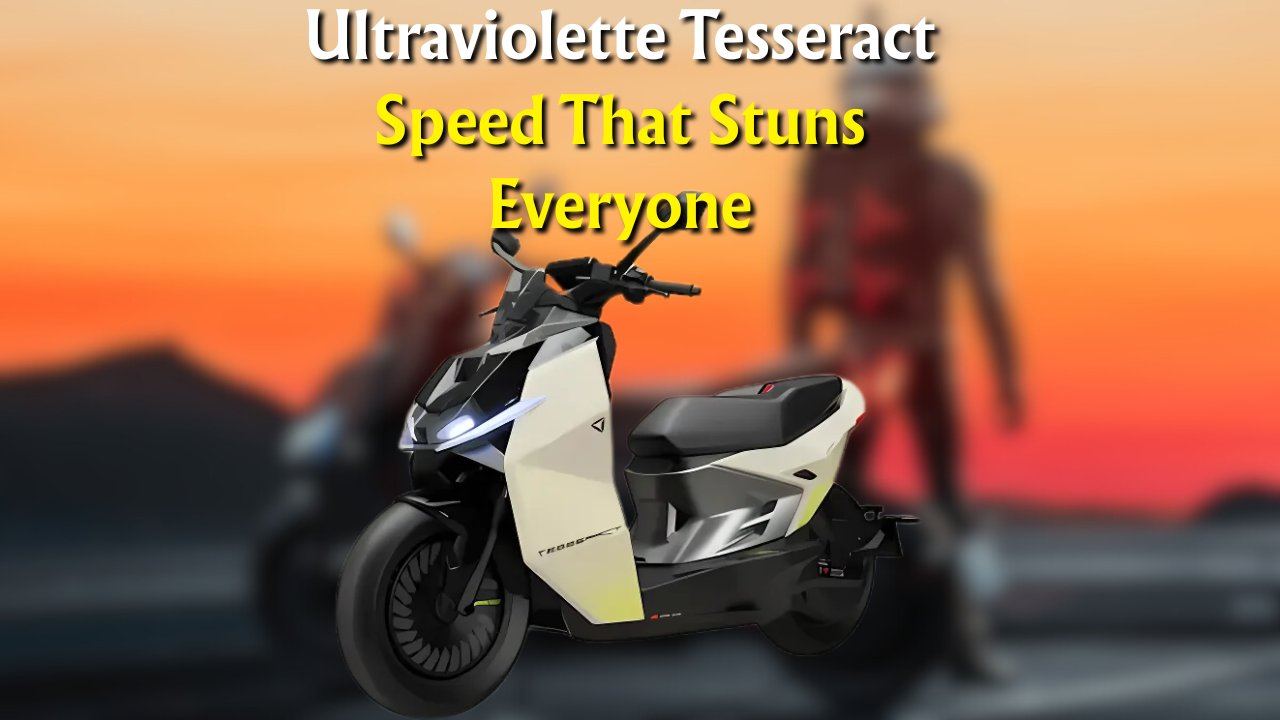
Ultraviolette Tesseract’s : In a world where electric vehicles are redefining performance benchmarks, the 2025 launch of the Ultraviolette Tesseract has sent shockwaves through the automotive industry. What was once thought to be impossible in an electric two-wheeler has now become a reality. This futuristic electric superbike has not only outpaced expectations but also humbled industry giants, including Ola Electric’s CEO, who publicly acknowledged its dominance.
Let’s take a detailed look at how the Ultraviolette Tesseract is changing the game and why it’s being hailed as the most shocking automotive surprise of the year.
What is the Ultraviolette Tesseract?
The Ultraviolette Tesseract is a high-performance electric superbike developed by the Indian startup Ultraviolette Automotive. Known for their UV F77 electric bike, the Tesseract represents a massive leap forward in design, technology, and performance. Unveiled in early 2025, it has quickly become the most talked-about EV in the global motorbike space.
Key Highlights of the Ultraviolette Tesseract:
- Breakthrough top speed exceeding 250 km/h
- Acceleration from 0-100 km/h in under 2.8 seconds
- Sleek, futuristic design with aerodynamics in focus
- Dual battery architecture for extended range
- Regenerative braking system and AI-based stability control
Unmatched Speed and Performance: Leaving Competitors in the Dust
Ultraviolette Tesseract has stunned the industry with numbers that were previously unheard of for an electric motorcycle. Let’s compare the performance stats with some leading players:
Performance Comparison Table
| Feature | Ultraviolette Tesseract | Ola Diamondhead (2025) | Ather 450X Gen 4 | BMW CE 04 |
|---|---|---|---|---|
| Top Speed | 250+ km/h | 150 km/h | 90 km/h | 120 km/h |
| 0-100 km/h Acceleration | 2.8 seconds | 5.5 seconds | 6.5 seconds | 9 seconds |
| Peak Power Output | 120 HP | 65 HP | 8.5 HP | 42 HP |
| Battery Capacity | 15.5 kWh (dual cell) | 8.0 kWh | 3.7 kWh | 8.9 kWh |
| Range (claimed) | 340 km | 220 km | 130 km | 130 km |
| Fast Charging Time (0-80%) | 18 minutes | 35 minutes | 45 minutes | 65 minutes |
| AI Integration | Advanced onboard AI | Basic dashboard AI | None | None |
| Price (Expected, INR) | ₹9.5 – ₹10.5 lakh | ₹5.5 lakh | ₹1.6 lakh | ₹11 lakh |
Ultraviolette has clearly prioritized raw power and advanced software integration, giving it a cutting-edge appeal.
Ola CEO’s Surprising Statement: “We Have to Rethink Everything”
Soon after the launch of the Tesseract, Ola Electric’s CEO Bhavish Aggarwal made a statement during a press conference that shocked industry observers:
“Ultraviolette has redefined what we thought was possible in the electric bike space. Their new Tesseract has pushed all of us to rethink our strategies, especially in the high-performance segment. Hats off to their engineering team.”
This public acknowledgement not only highlights the Tesseract’s superiority but also reveals how quickly market leaders are being forced to catch up.
See more : Yamaha RX 100
Design That Turns Heads: From Sci-Fi Dreams to Reality
The Tesseract isn’t just a performance monster — it’s also a design masterpiece. Taking inspiration from stealth aircraft and aerodynamic sports cars, the bike features a sleek yet aggressive stance.
Noteworthy Design Features:
- Low-slung chassis with carbon-fiber body panels
- Hub-center steering system for improved stability
- Flush-mount displays and minimalistic control surfaces
- Adaptive headlights and smart tail lamps
- Futuristic alloy wheels with self-healing coating
Design Comparison Table
| Feature | Ultraviolette Tesseract | Ola Diamondhead | Ducati Panigale V4 | Tesla Cyberquad |
|---|---|---|---|---|
| Body Material | Carbon Fiber Composite | Steel & Aluminum | Aluminium Alloy | Steel Frame |
| Wheelbase | 1,470 mm | 1,400 mm | 1,465 mm | 1,350 mm |
| Seat Height | 820 mm | 800 mm | 830 mm | 880 mm |
| Smart Display | 8” Touch + HUD | 7” Touchscreen | LCD Analog | LED Touch |
| Lighting System | Adaptive LED Matrix | Dual LED | Dual Halogen | Full LED |
| Steering Mechanism | Hub-Center | Telescopic Fork | Telescopic | Dual Wishbone |
| Weight (Kerb) | 199 kg | 180 kg | 198 kg | 210 kg |
| Aerodynamic Drag Coefficient | 0.22 Cd | 0.32 Cd | 0.28 Cd | 0.35 Cd |
The Tesseract is clearly positioned not just as a vehicle but as a lifestyle icon for the modern, tech-savvy rider.
 Yamaha Rajdoot 350 New Model: Retro Charm Meets Modern Innovation for an Unmatched Ride Experience
Features That Push Boundaries
What makes the Tesseract truly groundbreaking is not just its speed or looks — it’s the tech stack embedded into the bike. Here’s a breakdown of some features that truly stand out:
Top Ultraviolette Tesseract Features:
- AI-powered adaptive cruise control
- Real-time diagnostics and predictive maintenance alerts
- Smartphone and smartwatch connectivity
- Anti-theft geofencing and live GPS tracking
- Performance tuning via mobile app
- Biometric ignition system
- Customizable rider modes (Track, Eco, Sport, Cruise)
These features make the Tesseract feel more like a smart device on wheels than a traditional motorbike.
Consumer Reactions: The Internet Goes Wild
As soon as the Tesseract’s demo video dropped on YouTube and social platforms, auto enthusiasts went into a frenzy. Comments flooded in, praising everything from its design to its soundless power delivery.
Public Sentiment Snapshot:
- Automobile influencers are calling it “the Tesla of two-wheelers.”
- Early reservation holders are thrilled by the cutting-edge tech.
- Traditional bikers are reconsidering their resistance to electric.
- Tech fans are excited by its AI features and customizability.
Even international media outlets like Top Gear and Electrek have covered the Tesseract as the next global sensation.
Is the Market Ready for the Tesseract?
While the Ultraviolette Tesseract looks and sounds like a dream bike, questions still linger about whether the Indian and global market is ready for such a product. With a steep expected price tag and premium positioning, it’s not aimed at the average commuter.
Potential Challenges:
- Premium pricing may limit mass adoption
- Charging infrastructure still under development
- Long-term maintenance unknown due to new tech
- Insurance costs could be higher
Despite these hurdles, the Tesseract opens up a new segment: ultra-premium electric superbikes for performance and design lovers.
Market Readiness Assessment Table
| Market Segment | Adoption Potential | Comments |
|---|---|---|
| Urban Commuters | Low | Too powerful and costly for daily city rides |
| Performance Enthusiasts | Very High | Delivers unmatched thrill in electric form |
| Environmental Advocates | High | Zero emissions without compromising on speed |
| Tech-Savvy Youth | High | Features and design appeal to Gen Z |
| Traditional Bikers | Moderate | Resistance due to EV shift, but curiosity growing |
| Fleet Buyers | Very Low | Not suitable for taxi or delivery operations |
| Luxury Segment Buyers | High | Fits perfectly with luxury and lifestyle branding |
The Ultraviolette Tesseract is not just a product — it’s a revolution. With blistering speeds, futuristic design, and AI-powered tech, it represents the next generation of high-performance electric mobility. While it may not be for everyone, it sets the tone for where the industry is heading.
Its success is already rewriting playbooks and forcing rivals like Ola Electric to rethink their approach. Whether you’re a speed freak, a tech nerd, or a luxury enthusiast — the Tesseract offers something no other EV bike does right now: a genuine taste of the future.

Disclaimer: The specifications and comparisons are based on early 2025 data and may change upon final production releases. Always refer to the manufacturer’s official site for the most accurate information.