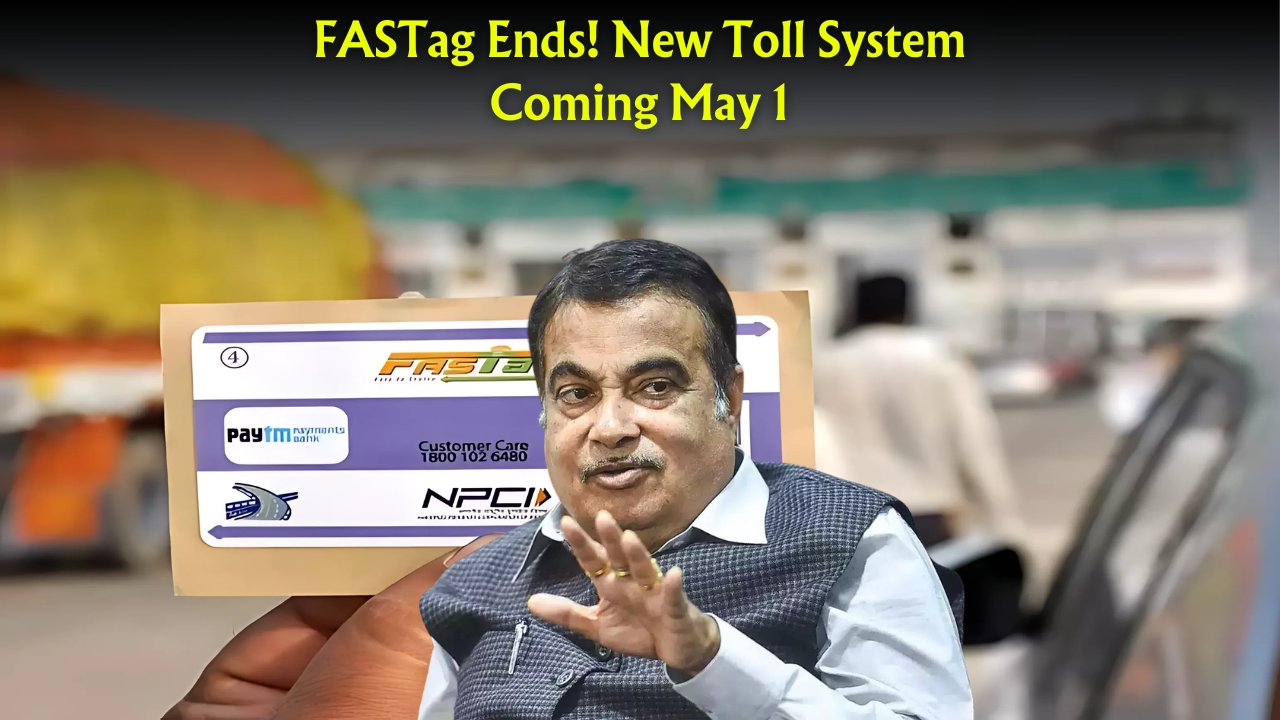
New Toll Payment System : India is gearing up for a major transformation in its highway toll collection system. Starting May 1st, 2025, the National Highways Authority of India (NHAI) will roll out a brand-new toll payment technology set to replace the existing FASTag system. This upgrade is part of the government’s ongoing efforts to streamline traffic flow, improve road infrastructure, and enhance the driving experience for millions of commuters.
This new system promises faster toll transactions, greater transparency, and reduced congestion on national highways. Here’s everything you need to know.

What Is Replacing FASTag?
The new system will utilize an innovative Automatic Number Plate Recognition (ANPR) technology integrated with GPS-based tolling, effectively making toll booths almost invisible to travelers.

Key Highlights:
 Yamaha Rajdoot 350 New Model: Retro Charm Meets Modern Innovation for an Unmatched Ride Experience
- No need to stop or slow down at toll plazas
- Toll deducted automatically based on distance traveled
- Linked directly to vehicle number plates
- Aims to eliminate traffic jams at toll booths
- Real-time tracking and billing through mobile apps
Why the Shift From FASTag?
While FASTag was a big leap from manual toll collection, it still required vehicles to slow down or halt at plazas. This caused delays, especially during peak hours.
Challenges with FASTag:
- Tag misreads and faulty scanners
- Users forgetting to recharge
- Traffic congestion despite digitalization
- High maintenance of RFID systems
What Makes the New System Better?
- No physical tag needed: Based solely on your vehicle’s registration number
- Fully automatic billing: No manual intervention
- Efficient traffic movement: Eliminates choke points at plazas
How Does the New Toll Payment System Work?
This futuristic system combines GPS-based tracking and camera-based ANPR (Automatic Number Plate Recognition) to track vehicle movement and charge tolls accordingly.
Process Overview:
- Vehicle enters a tolled highway
- Cameras scan number plate automatically
- GPS records the distance covered
- Toll calculated based on kilometers driven
- Amount auto-deducted from linked bank account or digital wallet
Required Setup for Drivers:
- Valid vehicle registration with updated information
- Linked bank account or UPI wallet
- Mobile app for viewing toll logs and invoices
Benefits for Drivers and Transporters
This system aims to enhance the road travel experience for private drivers and commercial vehicle operators alike.
Advantages Include:
- No waiting time at toll booths
- Distance-based billing – pay only for what you use
- Reduction in fuel consumption
- Better transparency in toll charges
- Seamless interstate travel
Table 1: FASTag vs New Tolling System
| Feature | FASTag | New Tolling System (2025) |
|---|---|---|
| Technology Used | RFID | GPS + ANPR |
| Need to Stop at Plazas | Yes | No |
| Billing Type | Fixed per plaza | Distance-based |
| Hardware Requirement | Physical FASTag sticker | None (uses number plate only) |
| Payment Mode | Linked wallet/bank account | Linked wallet/bank account |
| Traffic Congestion | Moderate | Minimal |
| Maintenance | RFID reader dependent | Cloud-based, minimal maintenance |
| Launch Year | 2016 | 2025 |
Table 2: Required Preparations for Users
| Requirement | Description |
|---|---|
| Vehicle Registration | Must be updated and digitized with NHAI |
| Mobile Application | NHAI or partner app to track and manage payments |
| Bank Account/UPI Wallet | For automatic toll deduction |
| GPS & Camera Compliance | Installed on major national highways |
| Privacy Agreement | Consent to GPS tracking for toll calculation |
| Customer Support Access | For billing disputes or technical help |
| Toll Invoice Delivery | Via SMS, email, or mobile app |
| Pilot Cities (Phase 1) | Delhi, Mumbai, Bengaluru, Chennai, Hyderabad |
Impact on Logistics and Commercial Transport
This change holds significant advantages for the logistics industry, where time and efficiency are critical. Fleet operators stand to gain through automated tolling that saves time and simplifies toll expense management.
Key Industry Benefits:
- Faster delivery times
- Automated expense reports for each trip
- Reduced driver fatigue due to fewer halts
- Lower chances of toll fraud or manipulation
See more : KTM 125 Duke 2025
FAQs About the New Toll System
Will FASTag be completely removed?

Yes, FASTag will be gradually phased out starting May 2025. The new system will become the default for all highway toll collections.
What if my number plate is dirty or damaged?
Regular maintenance of your vehicle, including a clearly visible number plate, will be mandatory. Penalties may apply for unreadable plates.
How will I know how much toll I paid?
A real-time log of toll charges will be available in the official mobile app, along with digital invoices.
What about privacy concerns?
The system only tracks vehicles on tolled highways and for toll calculation purposes. Data protection measures will be in place.
Will there be a trial period?
Yes, pilot programs are already underway in select cities, with nationwide rollout starting May 1st, 2025.
Table 3: Timeline of Toll Collection in India
| Year | System Introduced | Technology Used | Key Feature |
|---|---|---|---|
| 2000 | Manual Tolling | Human-operated booths | Cash payments |
| 2016 | FASTag | RFID | Prepaid digital tag |
| 2025 | ANPR + GPS Tolling | AI + Vehicle Tracking | Distance-based automatic billing |
What Should You Do Now?
As the transition approaches, here’s what every vehicle owner should consider doing before May 2025:
- Update vehicle registration and ensure number plates are clean
- Download the official NHAI tolling app
- Link your preferred bank account or UPI wallet
- Follow updates from NHAI and your state RTO for compliance instructions
India’s leap from FASTag to a fully digital, GPS-based tolling system marks a significant milestone in highway modernization. With a goal to make road travel smoother, faster, and more transparent, this move is expected to benefit both private and commercial road users. As with any major upgrade, the key to a smooth transition lies in awareness, preparation, and timely action.
Stay tuned for further updates as the official rollout nears. The future of tolling is here – and it’s fast, smart, and seamless.

All the information provided in this article is based on official announcements and government sources available as of April 2025. Details may evolve as the system is rolled out nationwide. For the latest updates, always refer to the official NHAI or Ministry of Road Transport and Highways portals.